Photos supplied by the City of Brussels
Brussels is showing how schoolyard renovation can create cooler, greener and more educational outdoor spaces while helping the city adapt to heavier rainfall.
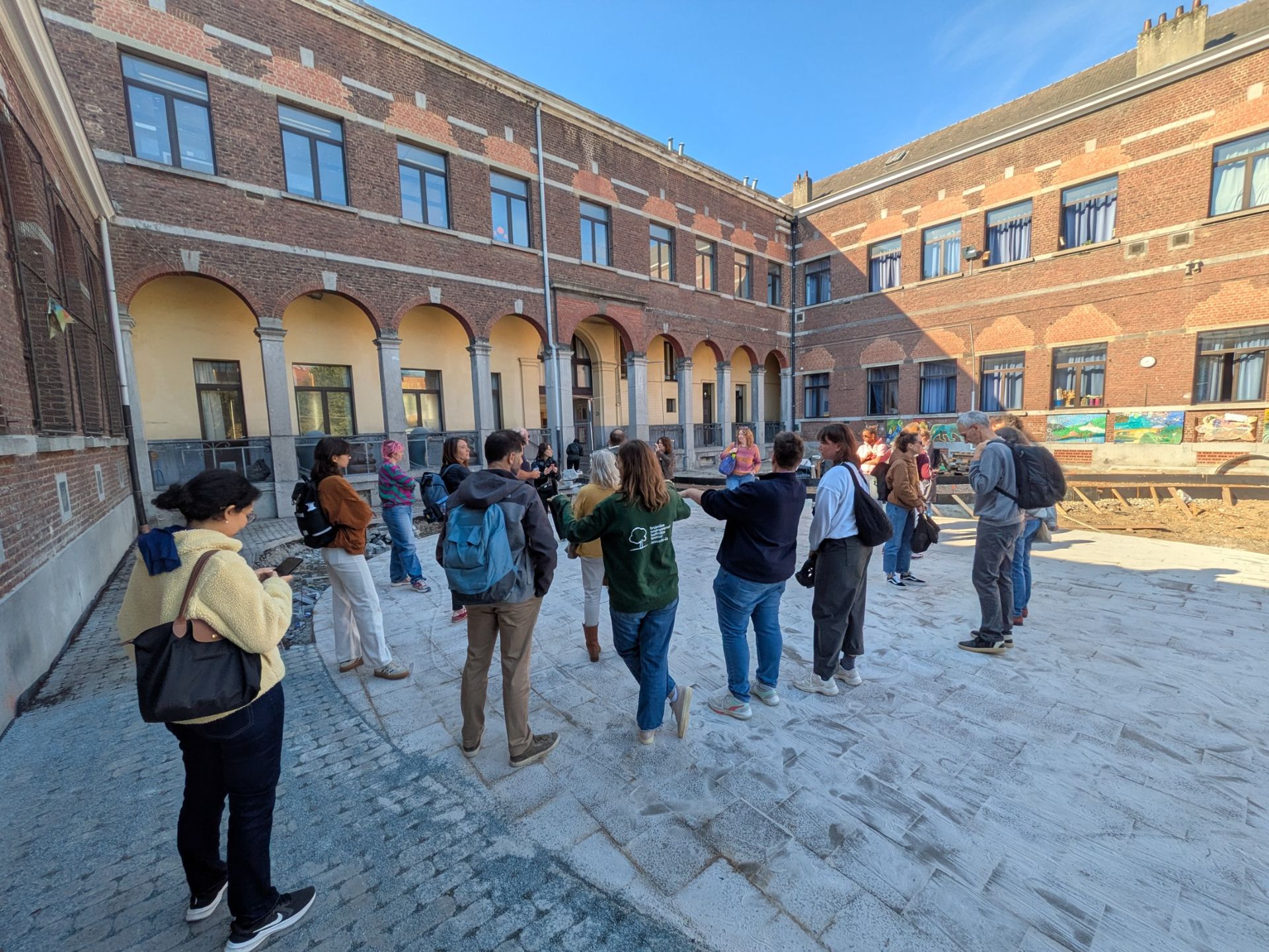
In October 2026, technical teams from the City of Brussels visited renovated schoolyards in Brussels and Antwerp as part of the RAINBOW project. The exchanges focused on practical ways to transform predominantly hard-surfaced playgrounds into welcoming places that manage rainwater, support nature and offer better conditions for play, rest and outdoor learning.
From paved playgrounds to climate-ready spaces
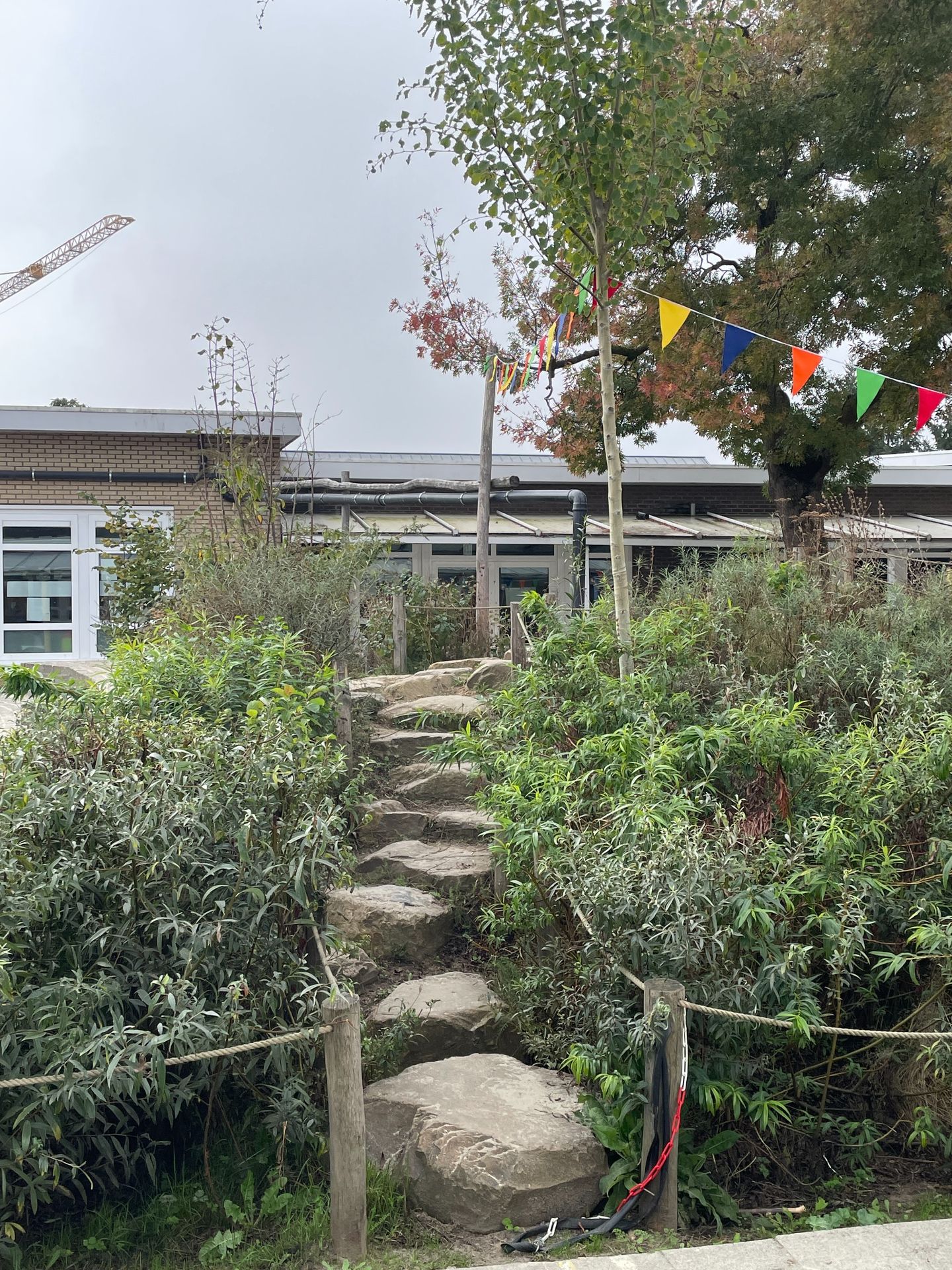
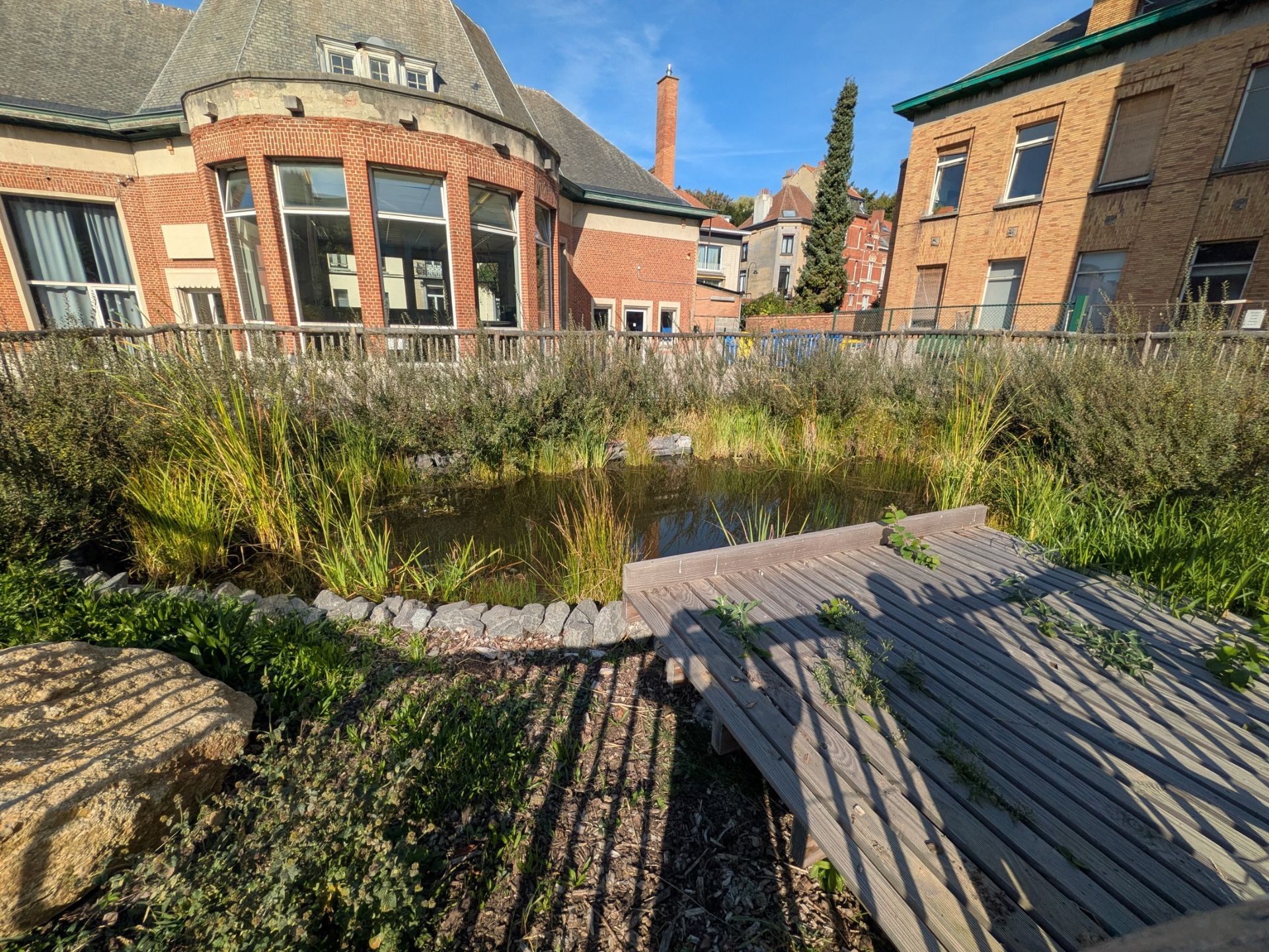
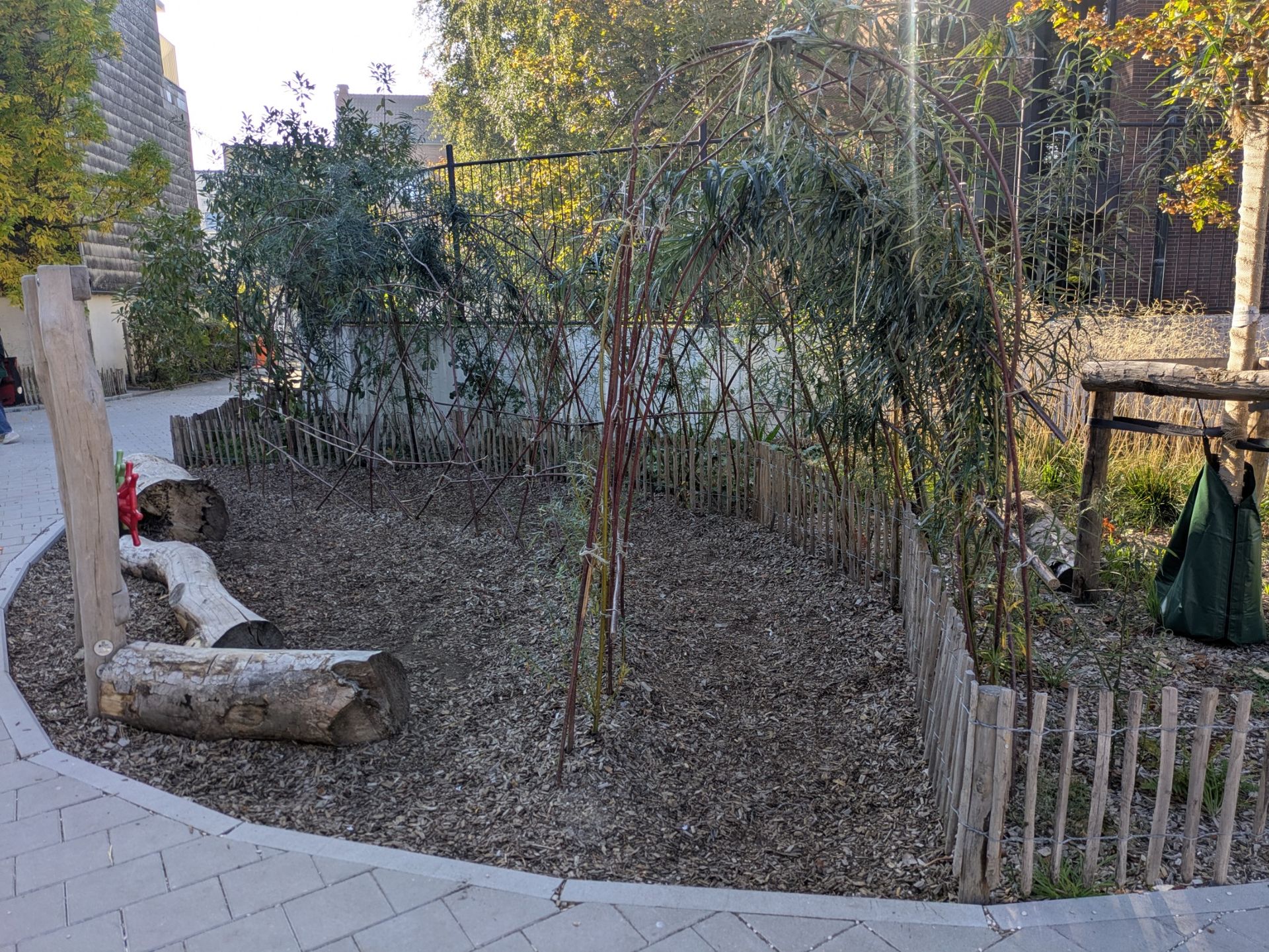
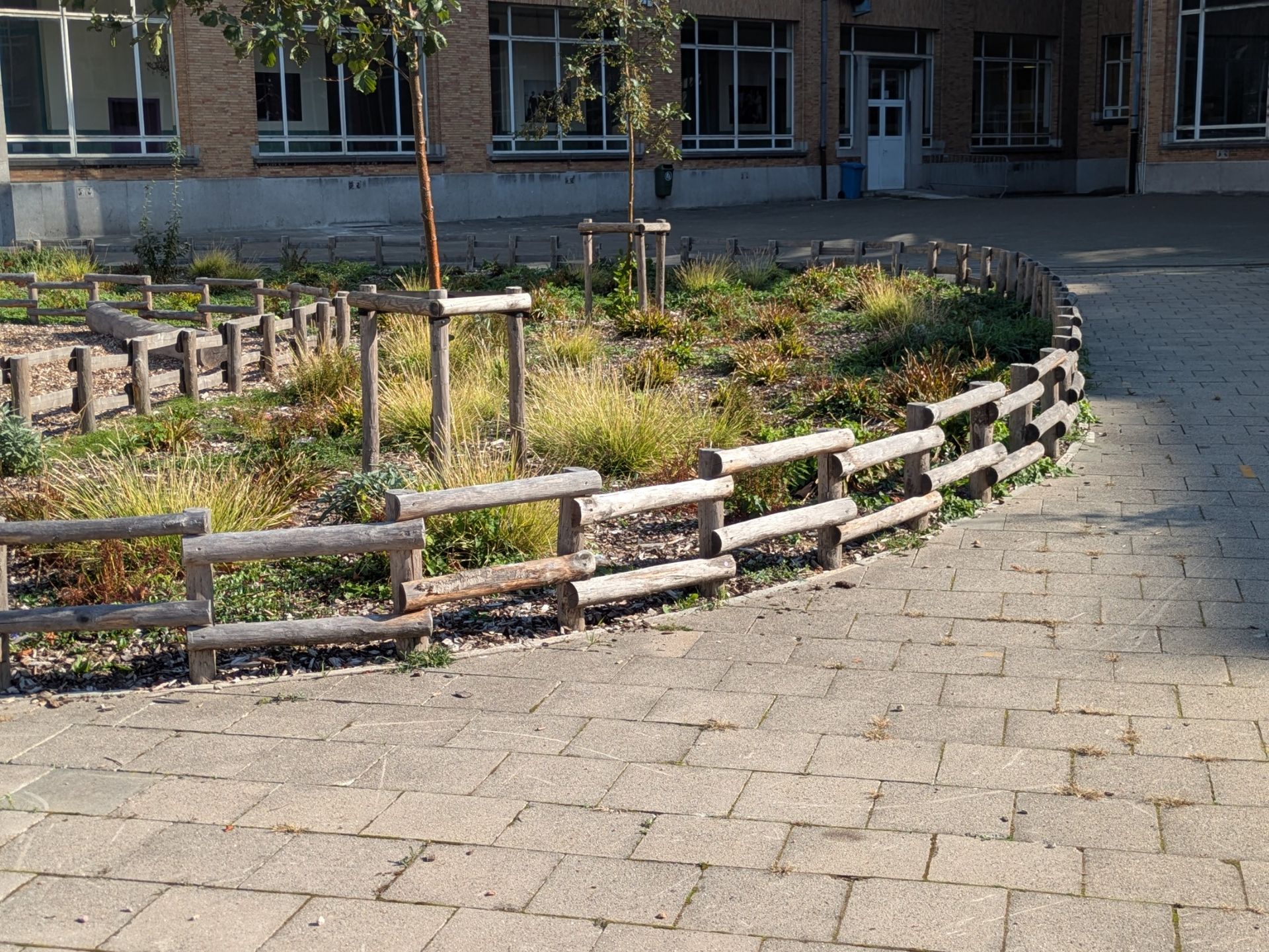
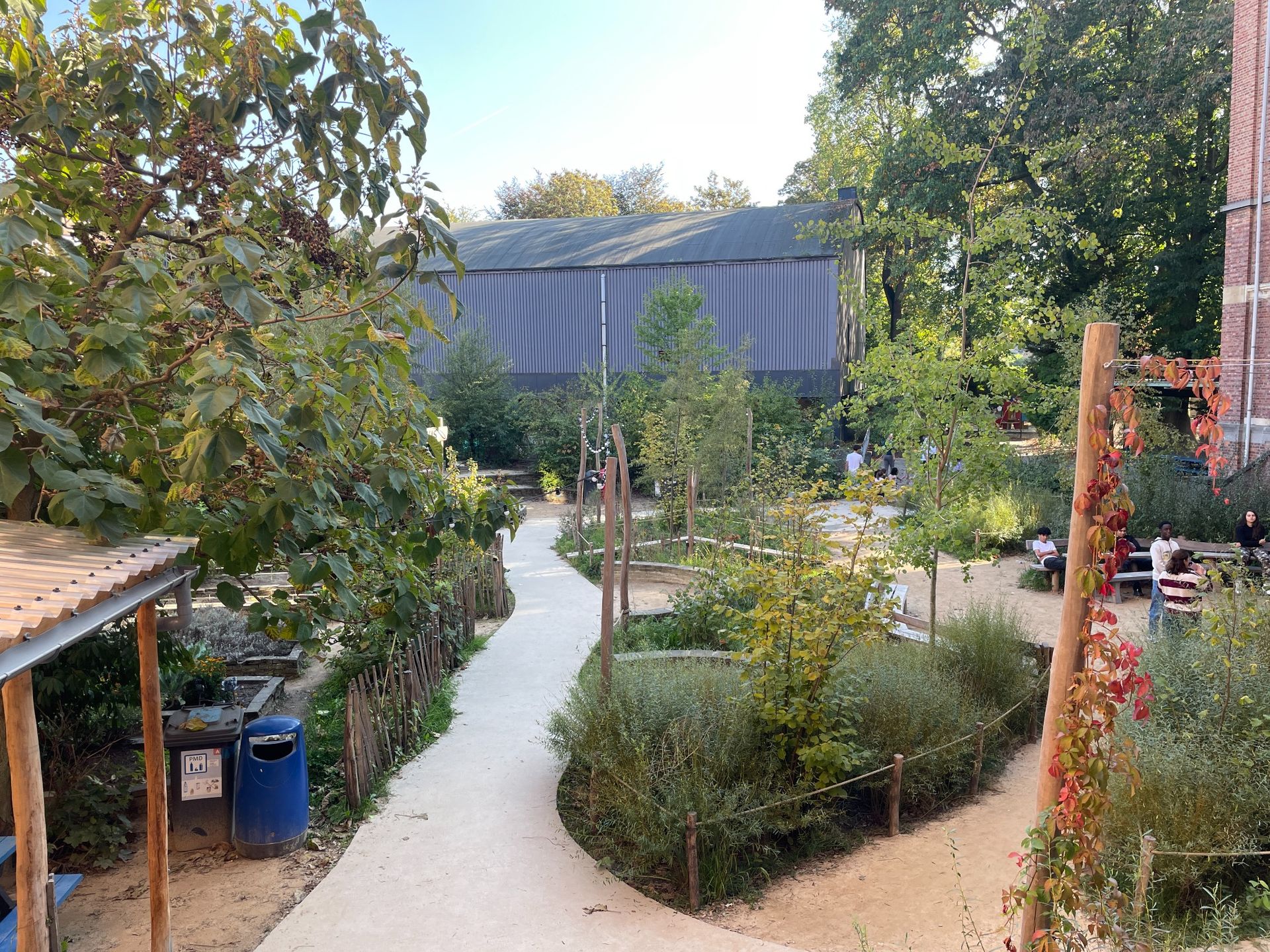
The visits were organised through Operation Re-creation, with experience-sharing from Brussels Environment, and included Clarté School in Jette, Athénée Royal de Bruxelles 2 and Kunsthumaniora in Laeken. These sites demonstrated how de-sealing can make room for planted areas, trees and shade while retaining a schoolyard’s everyday functions.
Rather than treating water, biodiversity and play as separate design challenges, the projects combine them. Vegetation and trees help cool school grounds during hot weather. Permeable surfaces and planted areas allow more rainwater to infiltrate locally. Natural play features and calmer green zones make the outdoor environment more varied for pupils.
Designing rainwater management from the start
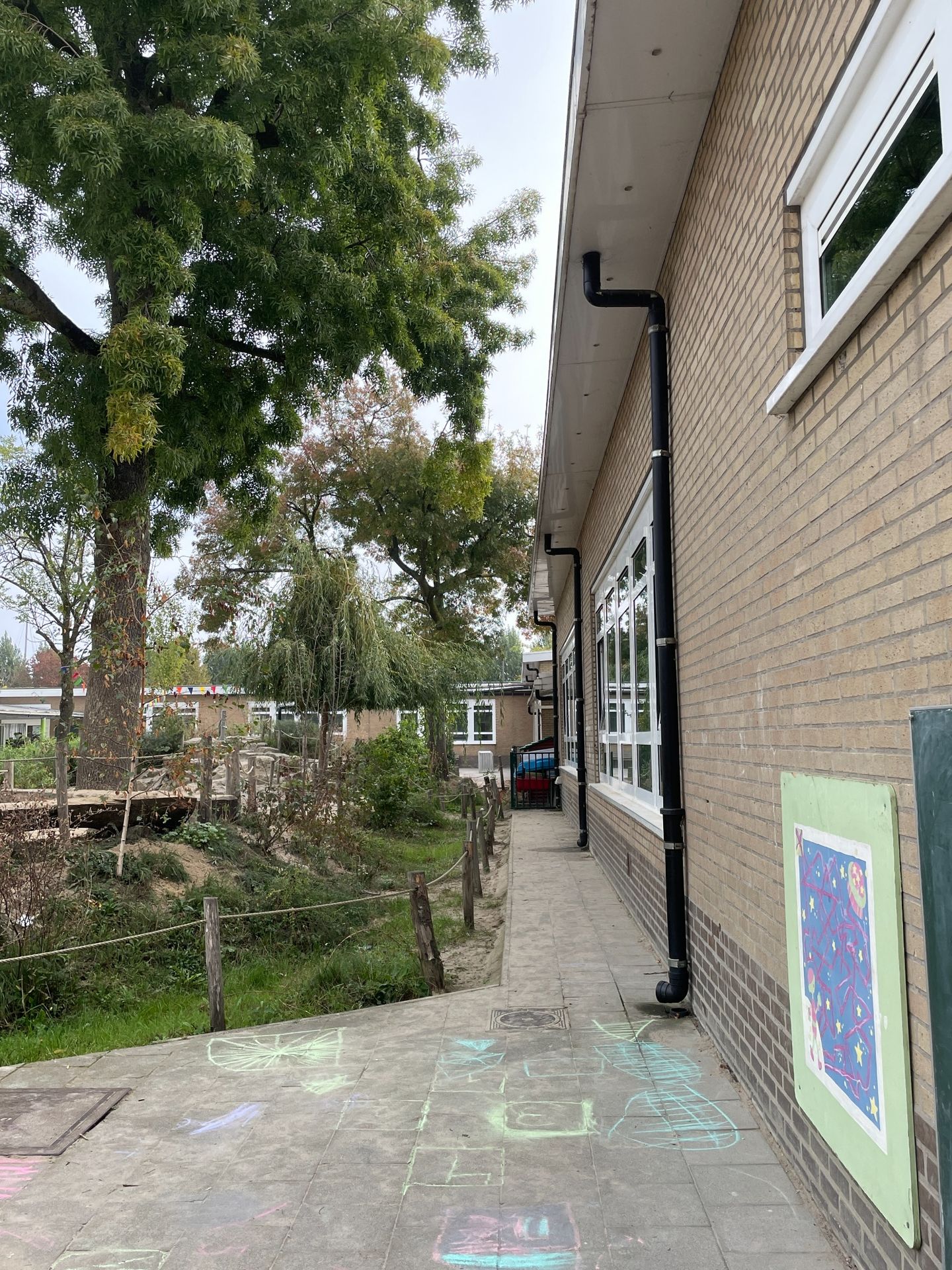
One central lesson from the visits is that rainwater management needs to be built into the first design decisions. This includes assessing opportunities to disconnect roof water, reduce impermeable paving, increase infiltration capacity and provide safe routes for excess water during intense rainfall.
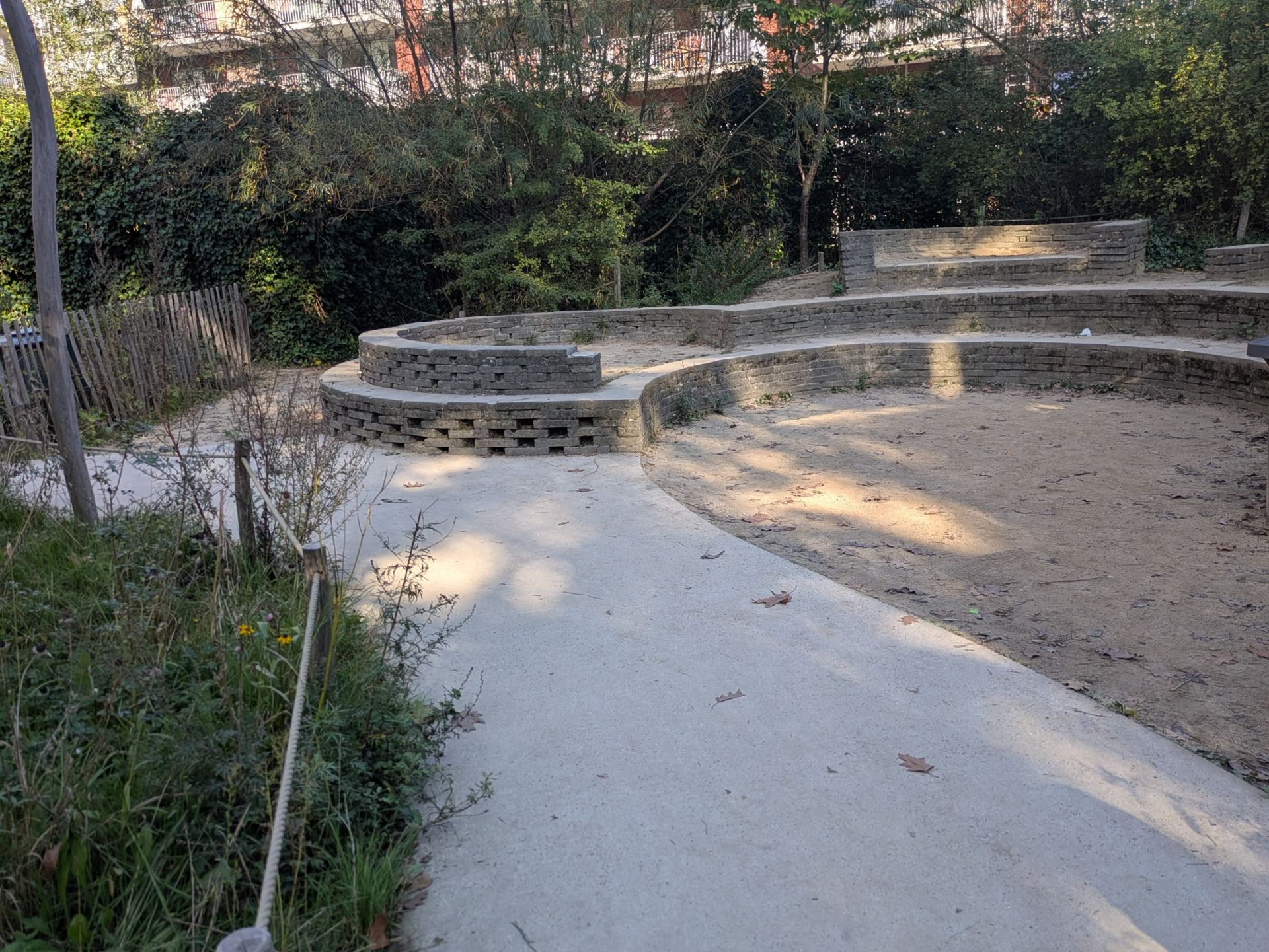
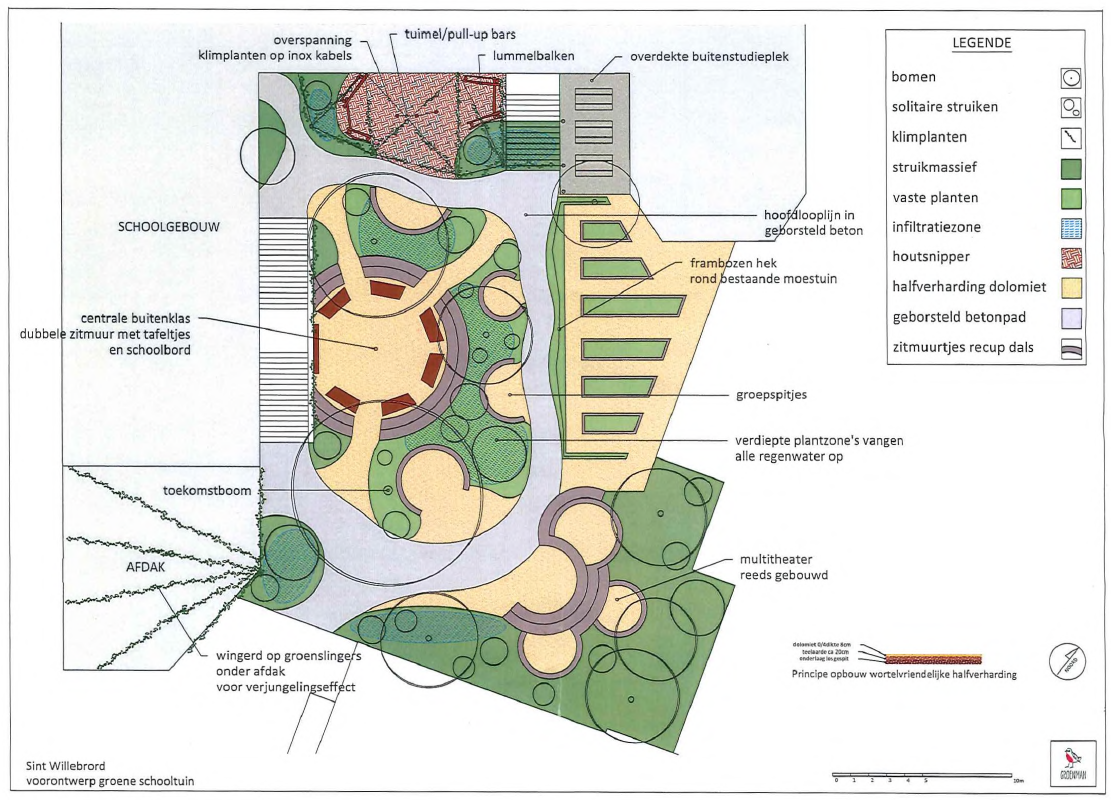
A technical reference from Sint-Willebrord-Heilige Familie school in Berchem illustrates this approach. Its gradual transformation includes an educational garden, an outdoor amphitheatre, learning spaces, reused concrete paving, planted infiltration areas known as wadis, and permeable or semi-permeable paths. The project aims to reduce paved surfaces by up to 75%.
Schoolyards shaped with their communities
The most effective transformations are not only technical. They also reflect how pupils, teachers, parents and school staff use the space every day. At the Antwerp reference school, these groups were involved at different stages of the process. In Brussels, the visits likewise underscored the importance of engaging schools and municipal technical services early.
This collaborative approach helps ensure that green schoolyards remain practical and inclusive. Maintenance needs, accessibility and safety should be considered alongside ambitions for more nature, shade and water-sensitive design.
A model for future projects
The RAINBOW exchanges offer a clear direction for future schoolyard renovation in Brussels: design for climate adaptation and everyday use together. Trees, vegetation, play, relaxation and outdoor education can reinforce one another when they are planned as part of one coherent landscape.
By prioritising de-sealing, local rainwater infiltration, reused materials where appropriate and shared long-term responsibilities, Brussels can turn schoolyards into resilient public spaces that benefit pupils, schools and the wider urban environment.