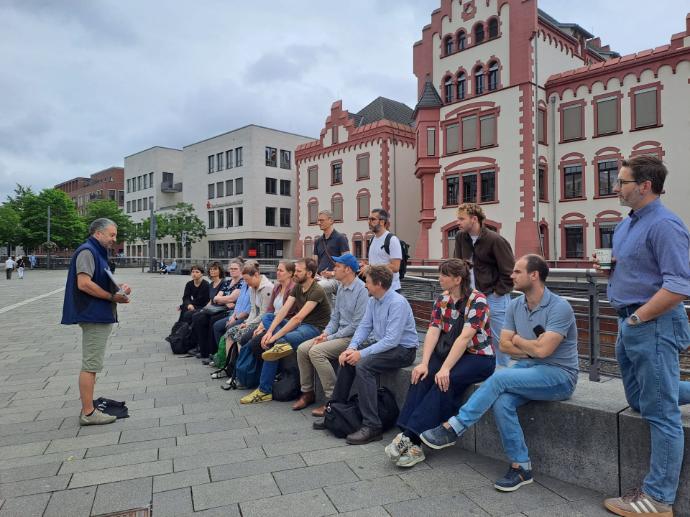
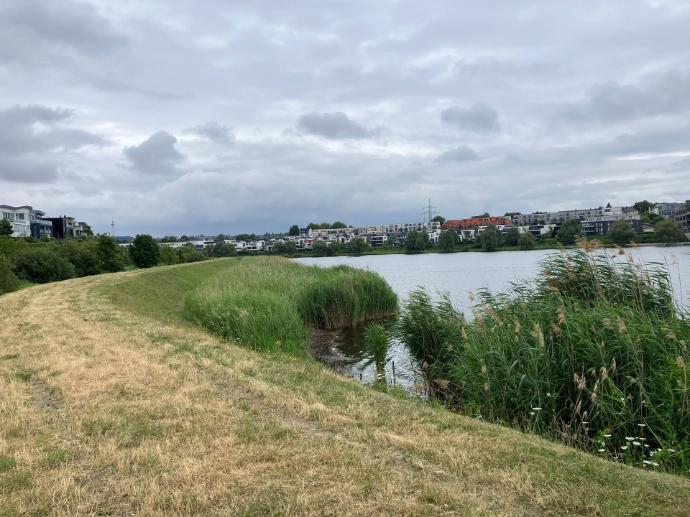

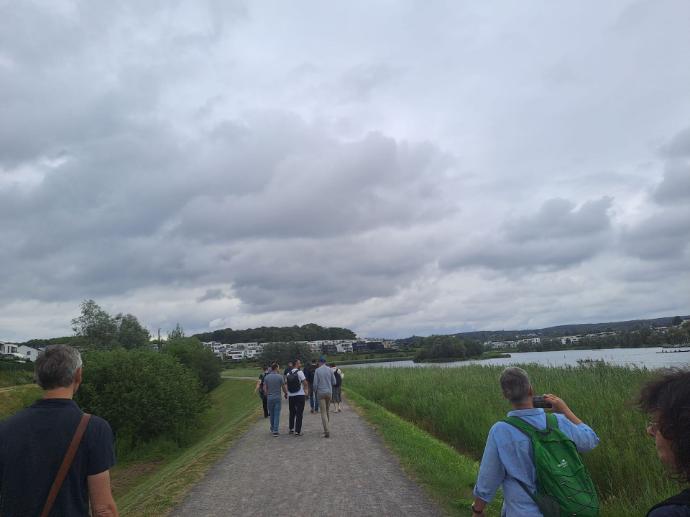

This week, the RAINBOW
team visited the Phoenix Lake in Dortmund as an outstanding example of
successful water management. The water management and climate protection
concept of the Phoenix Lake is an internationally recognized flagship
project and a model for sustainable urban planning. Its primary
functions are flood protection, the ecological restoration of the
Emscher River, and groundwater regulation.
The key pillars of the water management concept are:
Groundwater Management:
The
lake, covering approximately 24 hectares with a maximum depth of 3
meters, is primarily fed by groundwater. Due to the proximity of former
industrial contaminated sites, the area underwent extensive remediation
and is continuously monitored using a highly detailed groundwater model.
Flood Retention:
The
lake is hydraulically connected to the Emscher River. During periods of
exceptionally high river levels, it serves as a large flood retention
basin, temporarily storing excess water and thereby reducing the risk of
downstream flooding.
Water Quality and Algae Prevention:
Nutrient
concentrations—particularly phosphate—are strictly controlled. A
dedicated phosphate removal facility proactively extracts phosphates
from the water, preventing algal blooms and maintaining high water
quality.
Use and Restrictions:
The
ecological water quality is excellent. However, to ensure the long-term
protection of the ecosystem and preserve water quality, bathing,
swimming, and diving are strictly prohibited.